Author: Lila Goodwin - Research Fellow
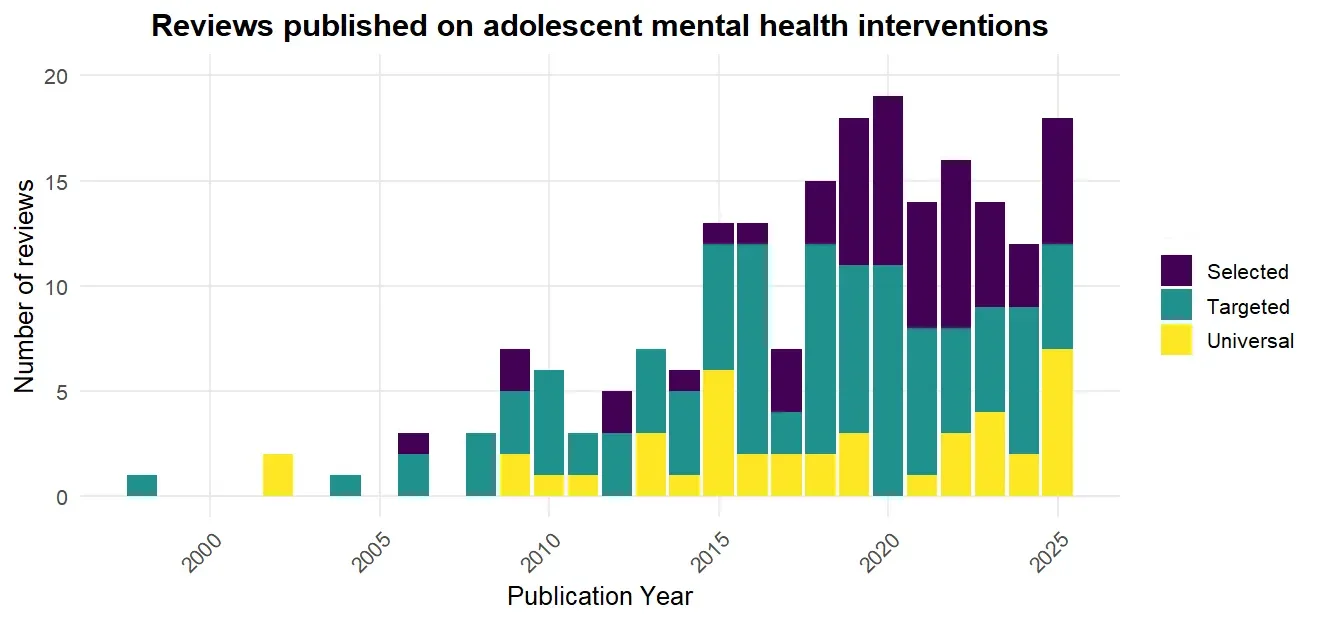
Figure 1. Number of systematic reviews published per year by intervention approach (universal, targeted, and selected).
This scoping exercise identified over 200 systematic reviews on interventions for adolescent mental health. The aim was to map the range of interventions, populations, and outcomes covered by these reviews. We also examined variation in how evidence is reported, as well as the effectiveness and implementation.
What did we look at?
This scoping exercise focused on adolescents aged 11–19, but we also investigated the effect of interventions in children (< 11s) or young adults (20 - 25). Studies that investigated at least one mental health outcome were included. Reviews were identified through structured searches of Cochrane and Google Scholar, using an iterative approach that expanded across intervention types -from psychological therapies to physical activity, mindfulness, and digital approaches. Only studies conducted in high-income countries were included.
In total, 203 reviews were identified, covering a wide spectrum of intervention strategies.
Methodology:
Searches were conducted using Google Scholar and Cochrane databases → reviewed abstracts for relevance (see csv file attached bellow for more information)
Google search strategy
This was an iterative search. Firstly, I used broad terms such as ‘adolescent interventions mental health’. Subsequent searches were refined based on intervention type (e.g., psychological, pharmacological, yoga, mindfulness, meditation, breathing exercises, music, dance, diet, physical activity, exercise, and digital interventions) and mental health outcome (overall mental health, depression, or anxiety). For each search, I reviewed results until three consecutive pages contained no relevant studies, at which point I proceeded to the next search.
Cochrane search strategy
Mental health related terms in title and abstract and adolescent related terms in title
((depress*):ti,ab OR (anxi*):ti,ab OR (internali*):ti,ab OR(externali*):ti,ab OR (wellbeing):ti,ab OR (mental health):ti,ab) AND ((adolescen*):ti OR (teen*):ti OR (youth):ti OR (young):ti)
What did we learn from the 203 systematic reviews available?
1. The evidence base is growing, and approaches varies
The number of systematic reviews has increased substantially over time, particularly from around 2015 onwards (Fig. 1 and 2). We found a high diversity of interventions. These ranged from school-based programmes to individual therapies and lifestyle approaches, reflecting the wide scope of strategies aimed at improving adolescent mental health (Fig. 1).
However, despite this growth, reviews vary in terms of outcomes, populations, and intervention types, which makes it difficult to draw clear and consistent conclusions about effectiveness.
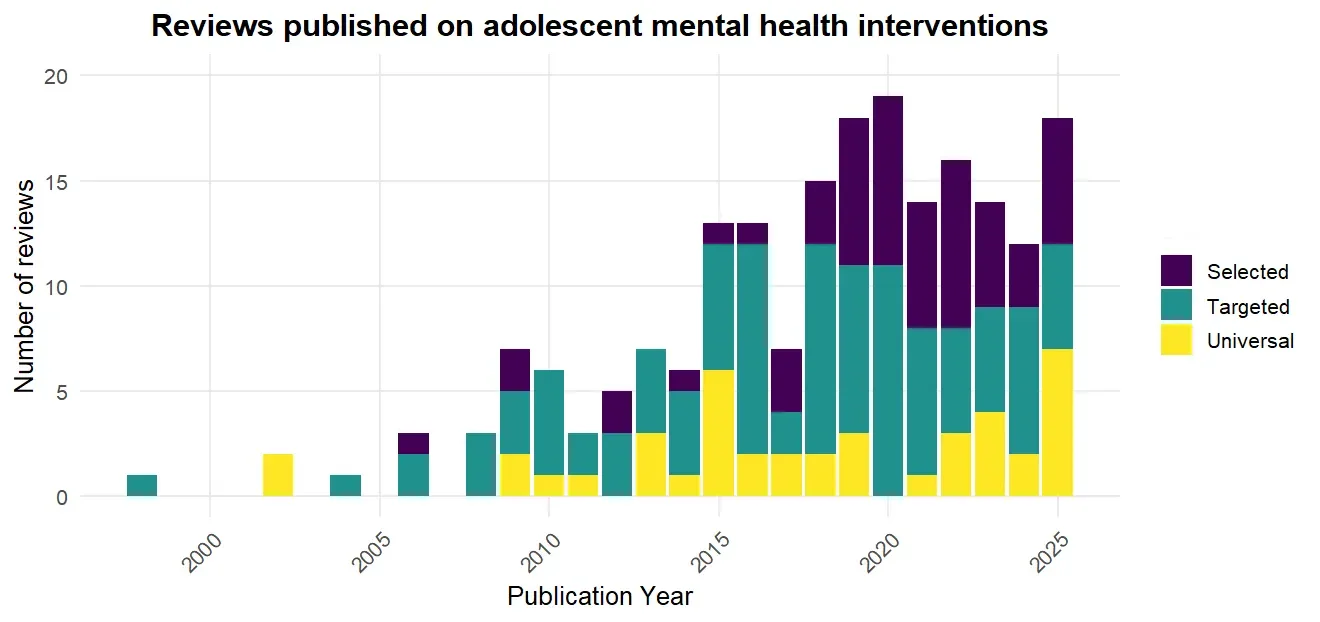
Figure 1. Number of systematic reviews published per year by intervention approach (universal, targeted, and selected).
2. Lack of methods description
Many reviews did not report important information, such as effect sizes or the number of included studies in their abstracts. In some cases, methodological details were also unclear. This lack of transparency creates a barrier in terms of accessibility to evidence, making it more difficult to synthesize findings
3. Some approaches dominate, others are emerging
Across the reviews, we found dominance of psychological and therapeutic interventions over time (Fig. 2). There is also an increasing of lifestyle approaches, such as physical activity and mindfulness, as well as digital interventions in more recent years.
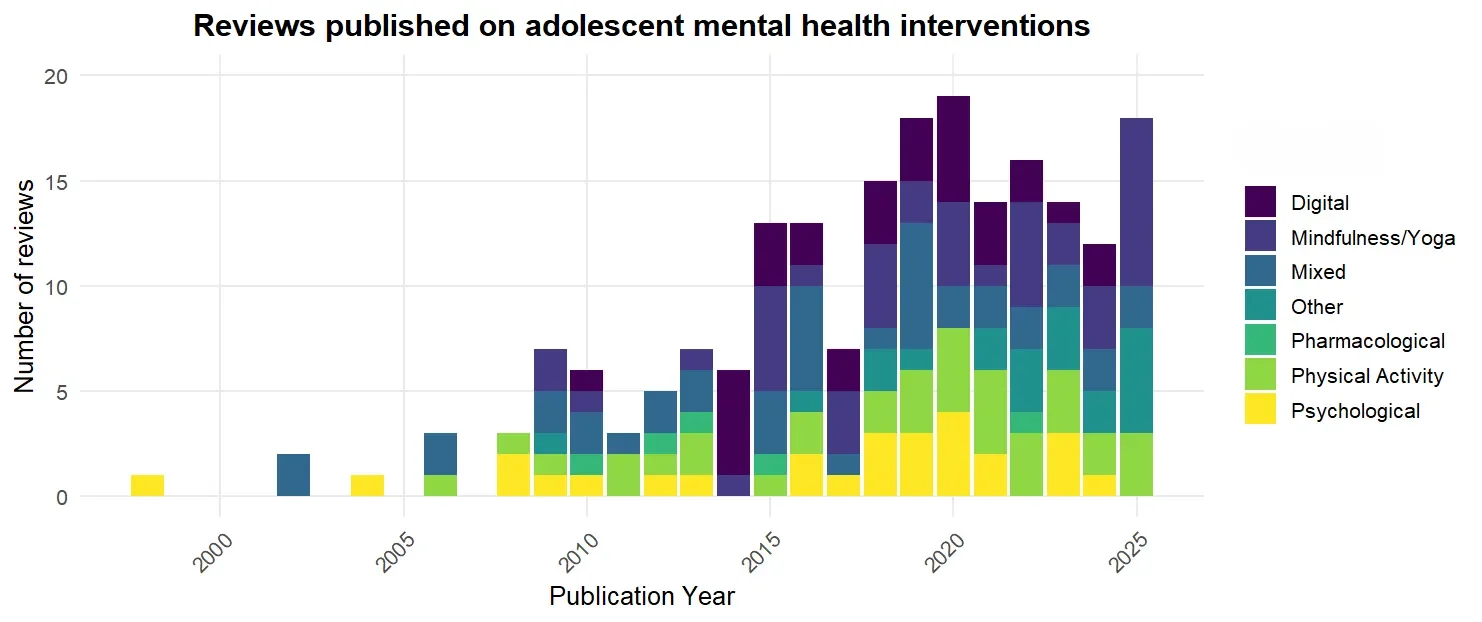
Figure 2. Distribution of systematic reviews on adolescent mental health interventions by publication year and intervention type (psychological, physical activity, pharmacological, digital, mindfulness/yoga, mixed, and other).
4. Gap between evidence and implementation
Although many reviews focused on effectiveness, fewer explored how interventions are implemented, sustained, or adapted to different contexts. This is not unique to this field. There is often strong evidence about what might work under controlled conditions, but less understanding of how interventions works in real-world settings, and at large scale.
Conclusion
This scoping exercise aimed to map the breadth of systematic reviews on adolescent mental health interventions. Findings show an increase in the number and diversity of reviews over time, alongside variability in approaches and methods. There is limited understanding on effectiveness, as well as a lack of evidence on implementation and sustainability of interventions.
CSV file:
Click to access information for all reviews (author, year, intervention approach, and intervention type).